Supplemental Reading for Week: Deuteronomy 8.
This is a backdated post mainly to make sure the supplemental reading is captured. There's still time for a comment or two, however.
Monday, April 28, 2008
Weekly Reading. Numbers 14-20.


Monday, April 21, 2008
Weekly Reading. Numbers 8-13.
Supplemental Reading for Week: Proverbs 3:1-12.
Breaking Camp.
The people have been rescued. They've rebelled. They've received the regulations to help them live pure lives, no longer in rebellion. They have been numbered and organized. Now it's time to head for the land God has promised them.
As you read this section of Numbers, try to put each piece of the narrative into the whole story. Ask this: "what is the purpose of this section?" (e.g. 8:5-26) Or this: "is this similar or in contrast to something else I've read?" (e.g. 11:1-3) Or this: "how does this section fit into the overall flow?" (e.g. 12:1-16 after chapter 11)
As always, any comment you want to make on the reading is more than welcome.
Monday, April 14, 2008
Who says counting is boring? Numbers 2.
These are the Israelites, numbered according to their families. All those numbered in the camps, by their divisions, are 603,550.
(Numbers 2:32 NET)
Six hundred and three thousand, five hundred and fifty wonderful people.
AH AH AH
Weekly Reading. Numbers 2 - 7.
Supplemental Reading for Week: Leviticus 16.
Let the counting begin. Even though we officially started this book last week, the counting is in earnest this week. These first few chapters in Numbers can be ones that challenge a reading plan. They're long. They're full of details that seem so removed from us. There are hard to pronounce names in them. They're long.
Here are some tips that may be of help in reading this section.
- Try reading out loud. Get into it. Imagine you're reading on stage and that you have to hold the audience's attention.
- Listen to someone else read the passage as you read along.
- Use a different translation from the one you ordinarily use.
- Draw a diagram of the encampment. (Or find a picture.)
- Make a genealogical chart, with extra details from the reading.
- Watch for unusual details.
- Ask God to reveal something in the reading for the day that would apply to your life.
- Thank God we're not under the law any longer.
Sunday, April 13, 2008
Favorite Bible Movies.
This post is a place where you can leave comments about your favorite Bible movie(s). Be sure and vote in the poll!
Read more...Monday, March 31, 2008
Weekly Reading. Exodus 31-35.
Supplemental Reading for Week: Psalm 99.
More details than you might ever want to know about the tabernacle. But also one of the lamest excuses of all time. Enjoy.
Thursday, March 27, 2008
Weekly Reading. Exodus 24-30.
Supplemental Reading for Week: Ezekiel 44.
This week's reading centers on the tabernacle. Before describing how the tabernacle was to be constructed, however, the covenant between Yahweh and the people of Israel is spelled out, and sealed with blood (Exodus 24:1-8). Most of your Bibles should have cross references to Jesus' words in describing Himself as the new covenant. Take a look at them.
As to the tabernacle, what an amazing set of detailed instructions. Some things I noticed:
- The materials are to come from the people as an offering, given only by those who desire to give.
- The list of materials is then distributed throughout the making of the tabernacle, and the clothing for Aaron.
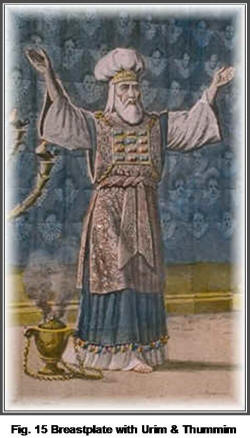
- There are a few unusual words used. What are all these things, including a tabernacle? Where do you go to find out what an ephod is?
- A visual person, especially someone who can draw, might have fun trying to sketch out what these instructions would look like in real life. Unfortunately, that's not me, so I went looking for a picture on the web. This one, from the 19th century, was particularly appealing. (And here's the high priest's uniform.)
A final question to consider: is there any significance to the placement in the narrative, of the giving of these instructions for building the tabernacle?
What do you think?